QUACKPOT + SPATCH · NOW PLAYING

Little ingredients.
Big questions.

Pull up a stool. QuackPot has three kitchen cases to crack—and Spatch is here to shake things up.

Captioned videos · Transcripts below · Watch together with a grown-up

QuackPot and Spatch inspect golden toast in their kitchen.

OPEN A CASE

The full investigations.

About two minutes each.
A new question in every episode.

2:06

Why does bread turn brown?

The Toast Case

Follow two breakfast clues: the chemistry behind golden color and the water loss behind crunch.

Watch the episode on YouTube ↗
A question to share

Can something become crispy without turning brown?

Read the transcript

THE TOAST CASE

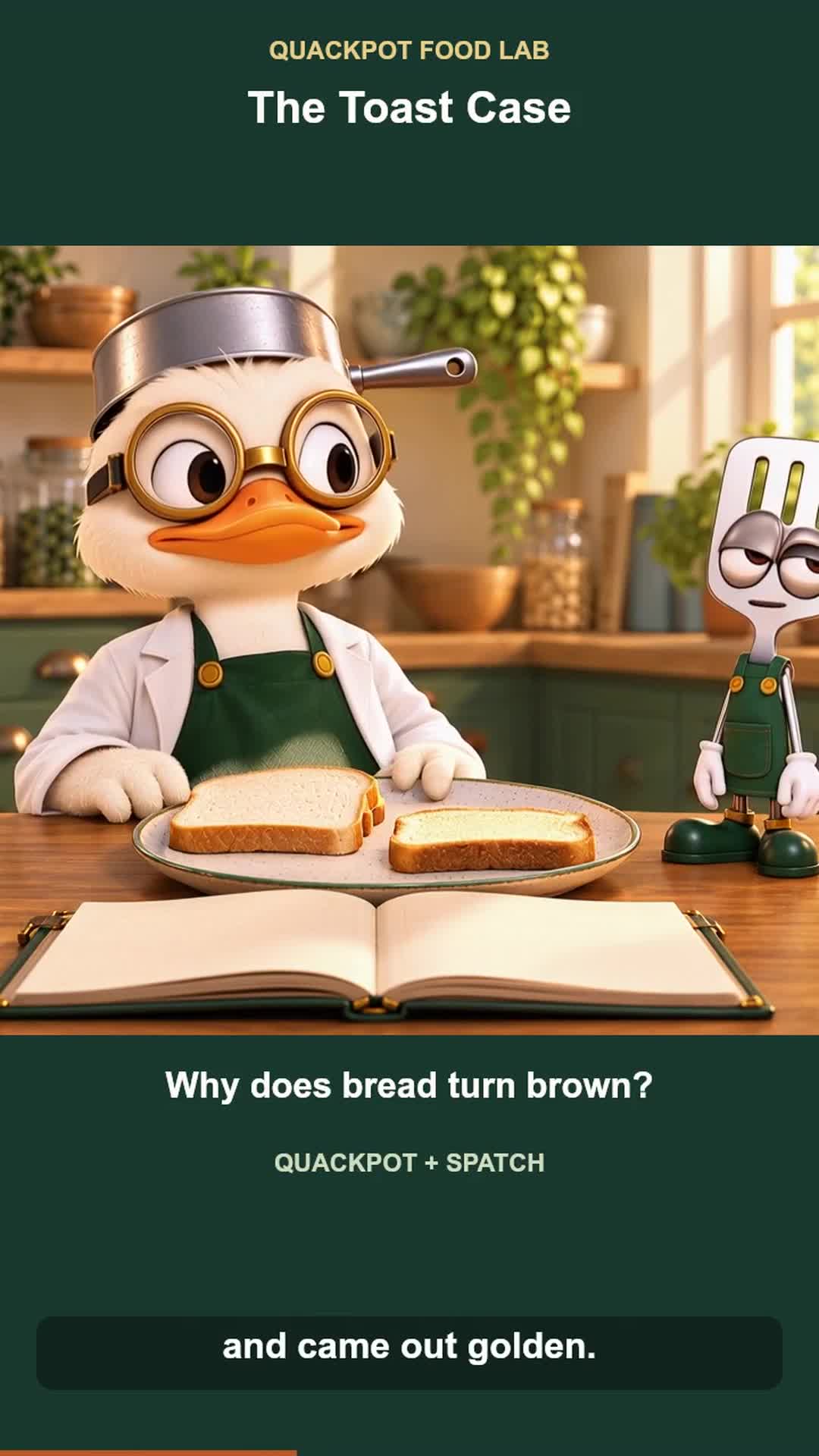
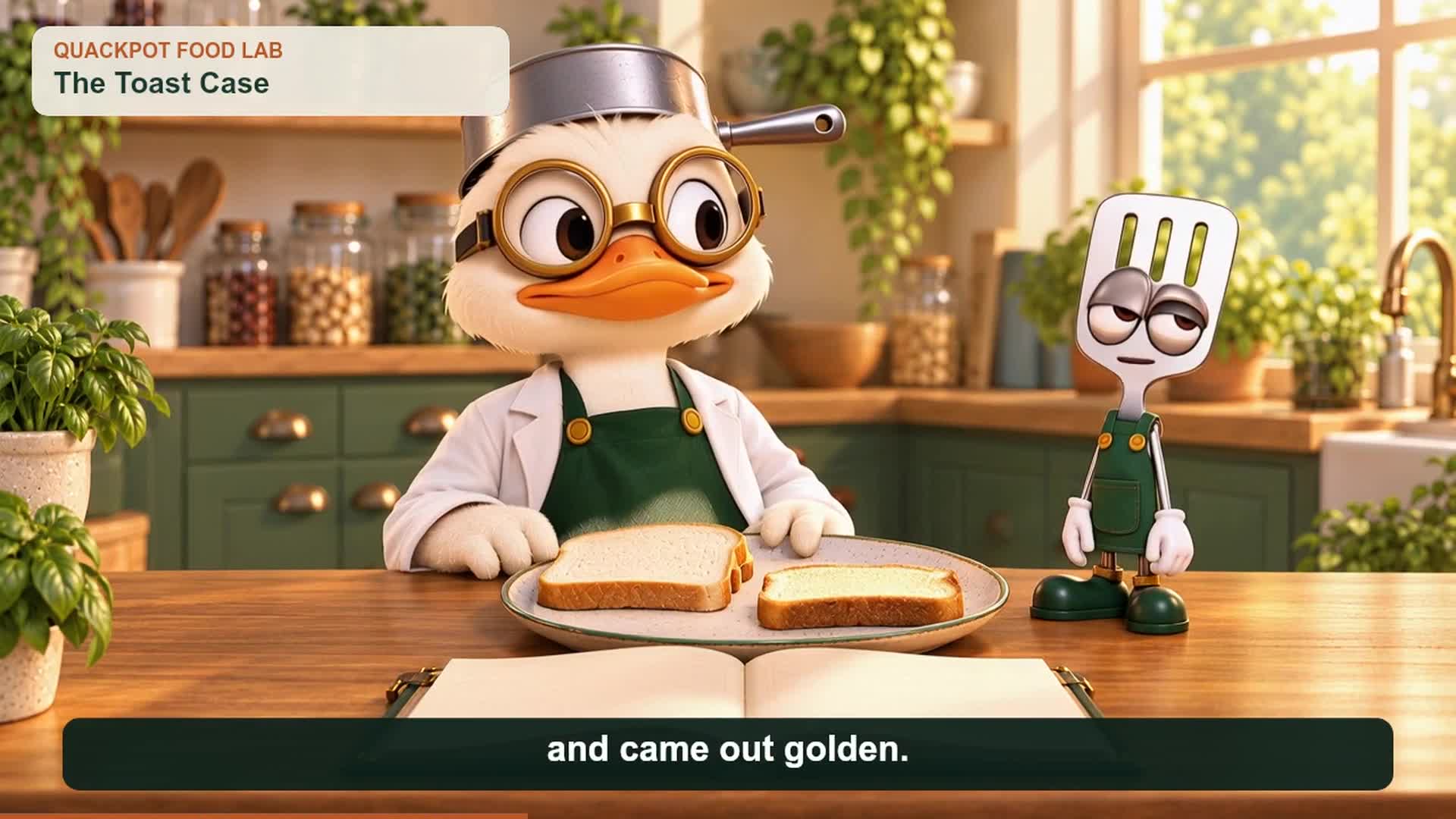
Lab Members! This bread went into the toaster pale and came out golden. Suspicious! I prepared an acceptance speech for my brilliant breakfast. Then Chef Blaze asked why it turned brown. Right. A speech is not an explanation.

A delicious chemical change

Bread contains sugars and protein building blocks called amino acids. Heat helps some of them react, making new brown colors and toasty aromas. That's the Maillard reaction. It sounds like a duck's surname. Sadly, I cannot take credit.

Crunch and color: different clues

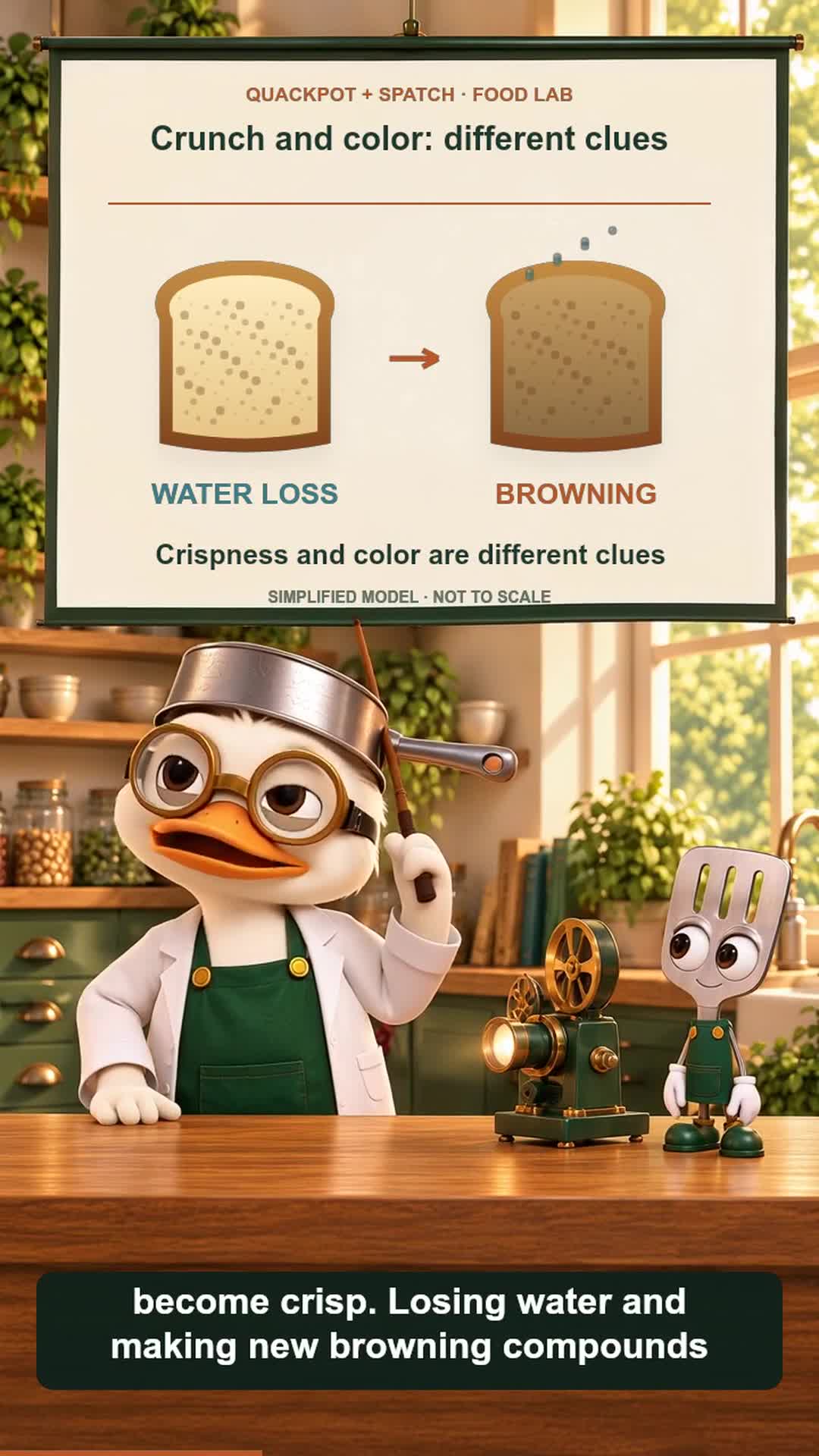
Does crispy automatically mean brown? No! Toasting also drives off water, helping the surface become crisp. Losing water and making new browning compounds are different changes. My notebook needs two clues: texture, and color. Apparently, crunchy is not a complete scientific report.

Maillard or caramelization?

And is every brown food caramelized? Also no. Caramelization is another kind of browning involving sugars. Maillard browning involves sugars reacting with amino components. Both can create flavor, but they are not the same process. Two cases. One very busy notebook.

Would more heat always help?

Prediction time! If gentle toasting makes lovely flavor, does turning the heat up forever make breakfast better forever? Give that theory a moment.

Golden is the goal

No! Too much heating can burn the bread. Browning is useful; endless heating is not. An adult handles the toaster and hot food. We are investigating the picture together, not reaching inside an appliance. My dramatic entrance can wait.

CASE NOTES

Case notes: heat helps sugars and amino components react. Water loss helps crisp the surface. Watch the toast, not your acceptance speech. Breakfast mystery solved! Now my salad dressing has separated into two layers. I appear to have another case.

Sources & grown-up notes

An adult handles the toaster and hot food. Never reach inside a toaster.
2:16

Why won’t oil and vinegar stay mixed?

The Salad Dressing Breakup

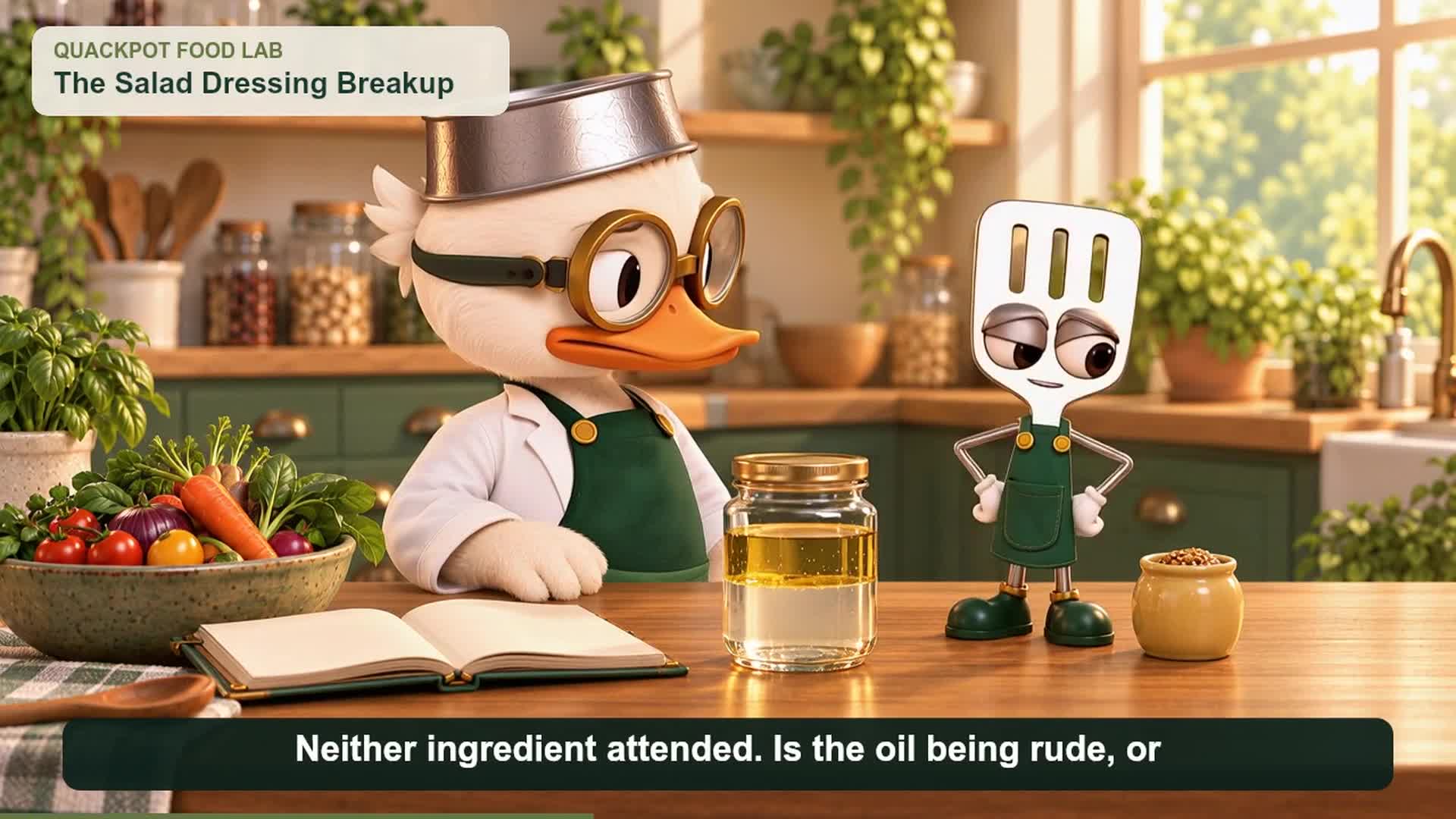
QuackPot investigates tiny droplets, mustard lends a hand, and Spatch discovers why a jar lid matters.

Watch the episode on YouTube ↗
A question to share

When dressing looks evenly mixed, has the oil disappeared?

Read the transcript

THE DRESSING BREAKUP

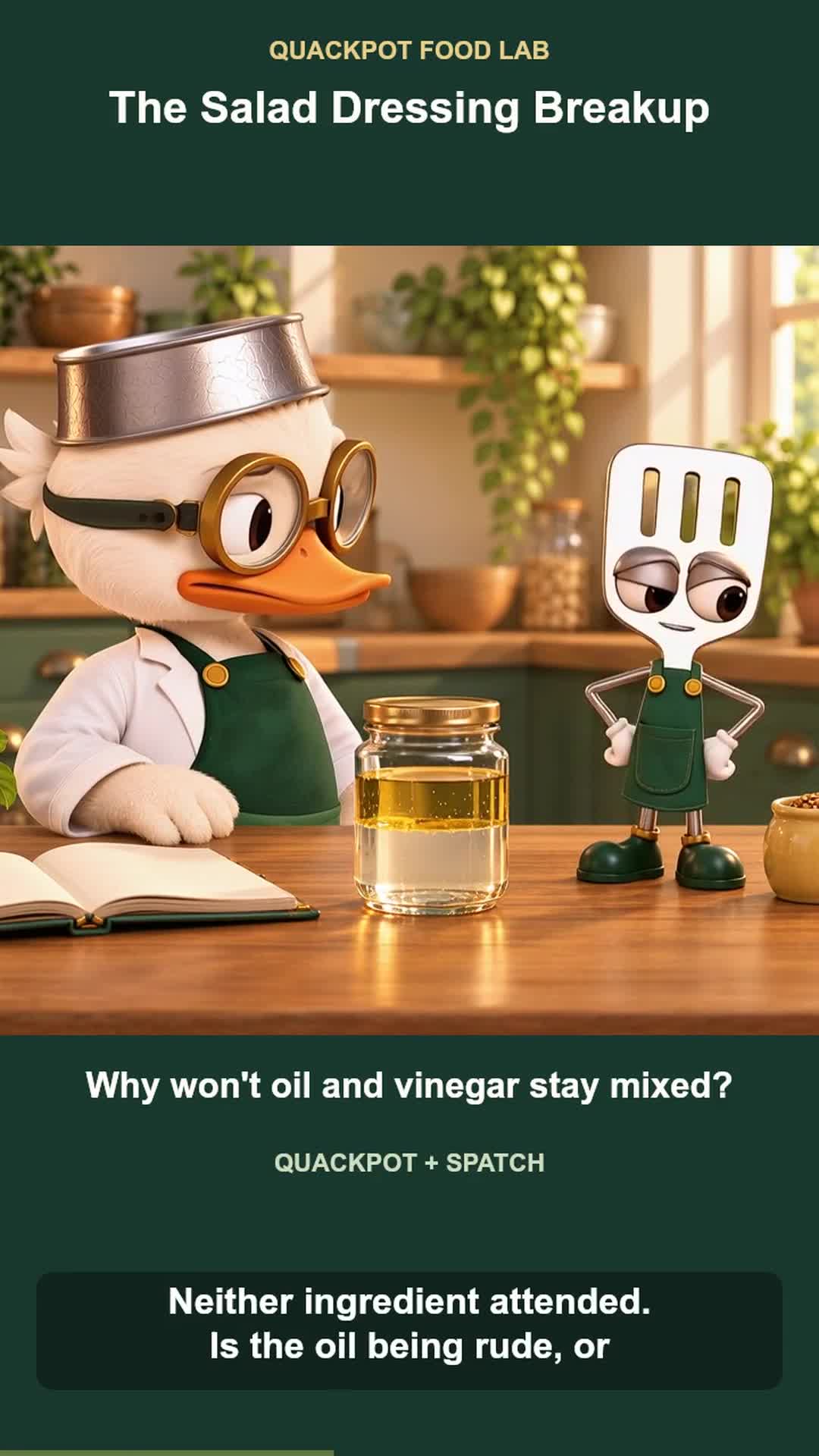
Lab Members! My oil and vinegar dressing has formed two layers. I arranged a team meeting. Neither ingredient attended. Is the oil being rude, or is something happening that a motivational speech cannot fix? Let's open the case.

Different molecules. Different behavior.

Vinegar is mostly water. Water molecules interact strongly with one another, and oil does not dissolve into that water. The liquids separate. Ordinary cooking oil is also less dense, so its layer sits above the vinegar. No personality conflict required.

Check the lid!

Let's shake things up! Spatch! The lid! Make sure the lid is secure before shaking.

Shaking makes tiny droplets

Shaking can break oil into little droplets spread through the watery liquid. That's an emulsion. The oil has not vanished or dissolved. Without enough help, droplets can join again and the layers return. A temporary truce! I should have kept the meeting shorter.

Can mustard help?

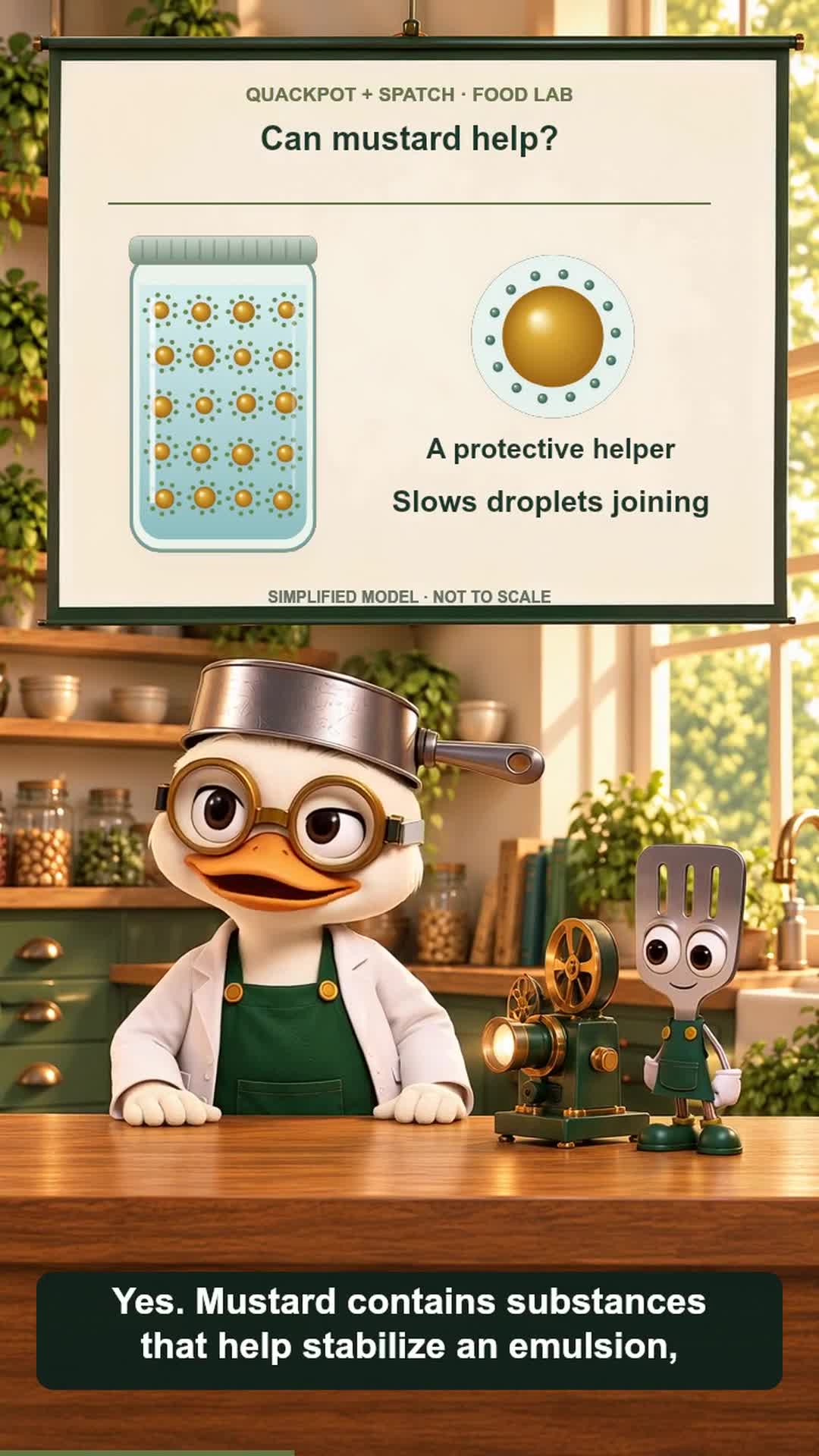
Can mustard help a dressing stay mixed? Yes. Mustard contains substances that help stabilize an emulsion, making it harder for oil droplets to join together. Mixing still matters. So do the ingredients and amounts. Mustard is a useful helper, not a forever guarantee.

Did the oil disappear?

Here's our prediction: when a dressing looks evenly mixed, has the oil disappeared, or is it still there in tiny droplets? Picture the jar before you answer.

Still there: tiny oil droplets

Still there, in droplets! Looking uniform is not the same as becoming one substance. These drawings are a simplified model, not microscope footage. If you explore a dressing with an adult, use food ingredients and check their labels.

CASE NOTES

Case notes: oil and water separate. Mixing makes droplets. A helper can keep those droplets apart longer. My dressing needed chemistry, not a pep talk. Now, about that tiny pinch of salt. How can something so small change the whole flavor?

Sources & grown-up notes

Make sure the lid is secure before shaking. Explore with a grown-up, use food ingredients, and check ingredient labels.

2:11

Where does the salt go?

The Salt Detective

Tiny crystals lead to a big question about dissolving and flavor. The microscopic chefs are off the hook.

Watch the episode on YouTube ↗
A question to share

If the crystals disappear, is the salt still in the bowl?

Read the transcript

THE SALT DETECTIVE

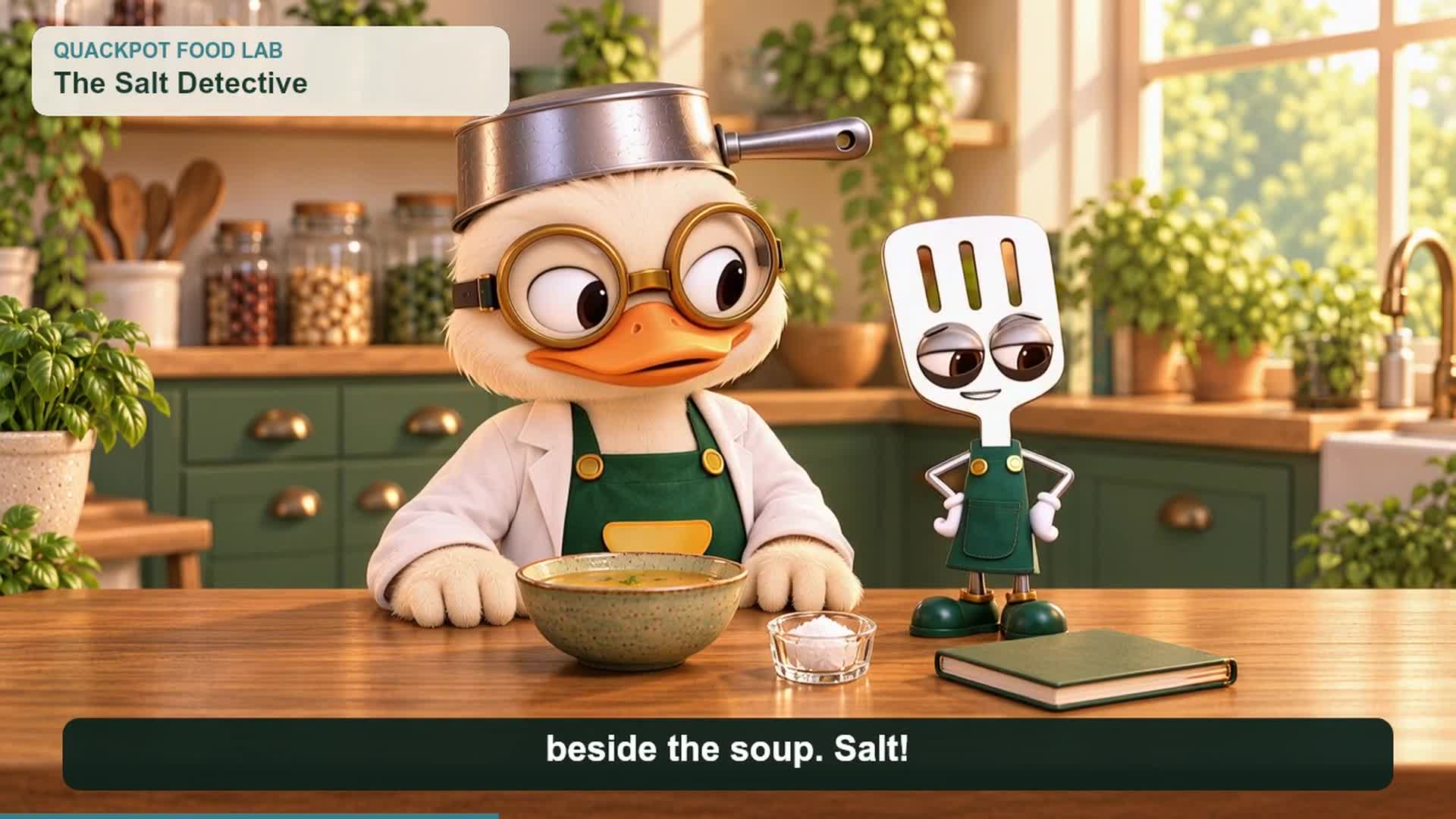
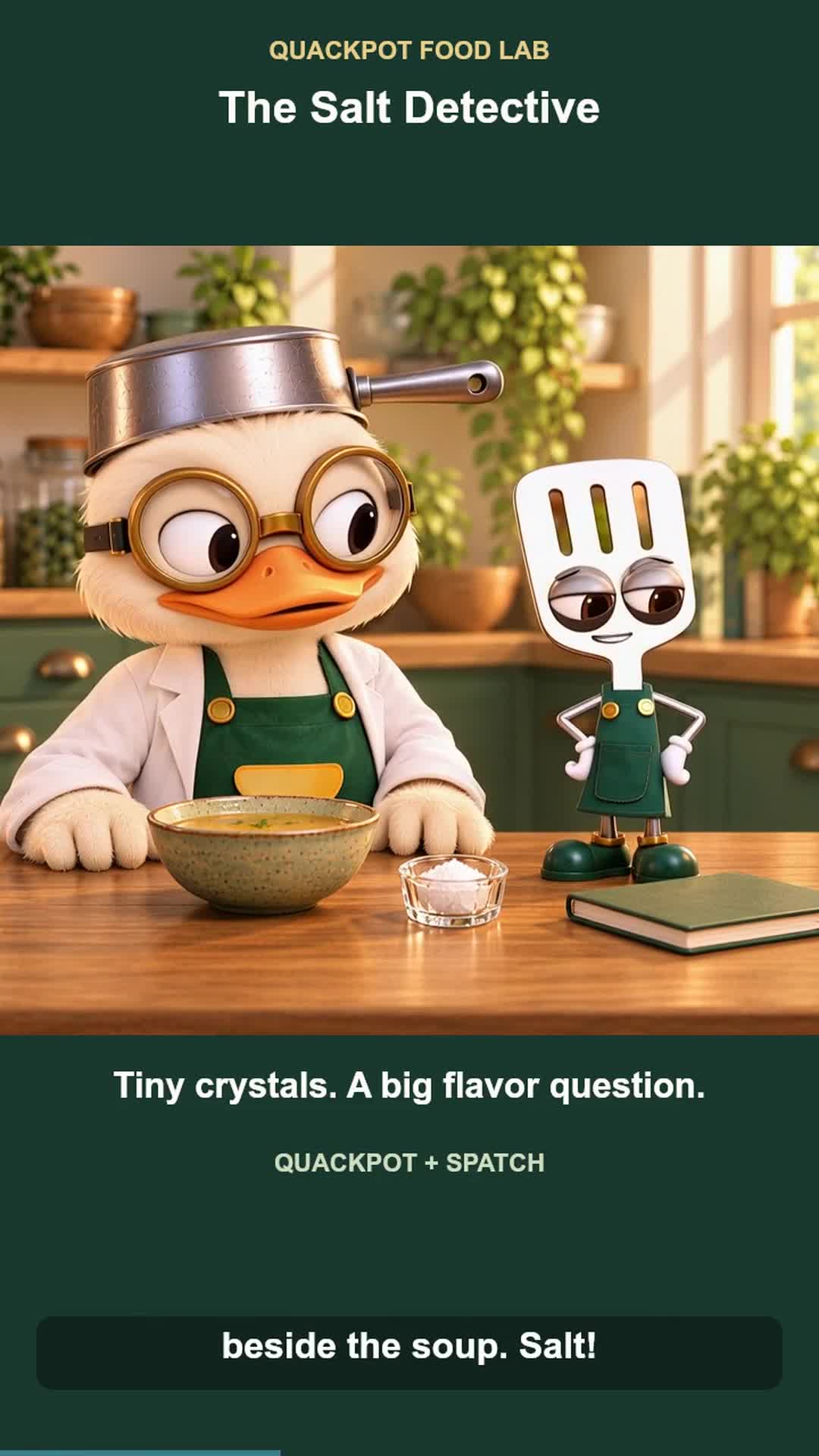
Lab Members! Today's suspect is tiny, white, and hiding beside the soup. Salt! It can change how food tastes without becoming the star ingredient. My first theory was microscopic chefs. Chef Blaze has requested a theory with slightly fewer chefs.

Dissolved does not mean gone

Table salt is sodium chloride. When it dissolves in water, sodium and chloride ions separate from the crystal and spread through the liquid. The visible crystals can disappear while the salt is still there. An excellent hiding place. A terrible disappearing act.

More than a salty taste

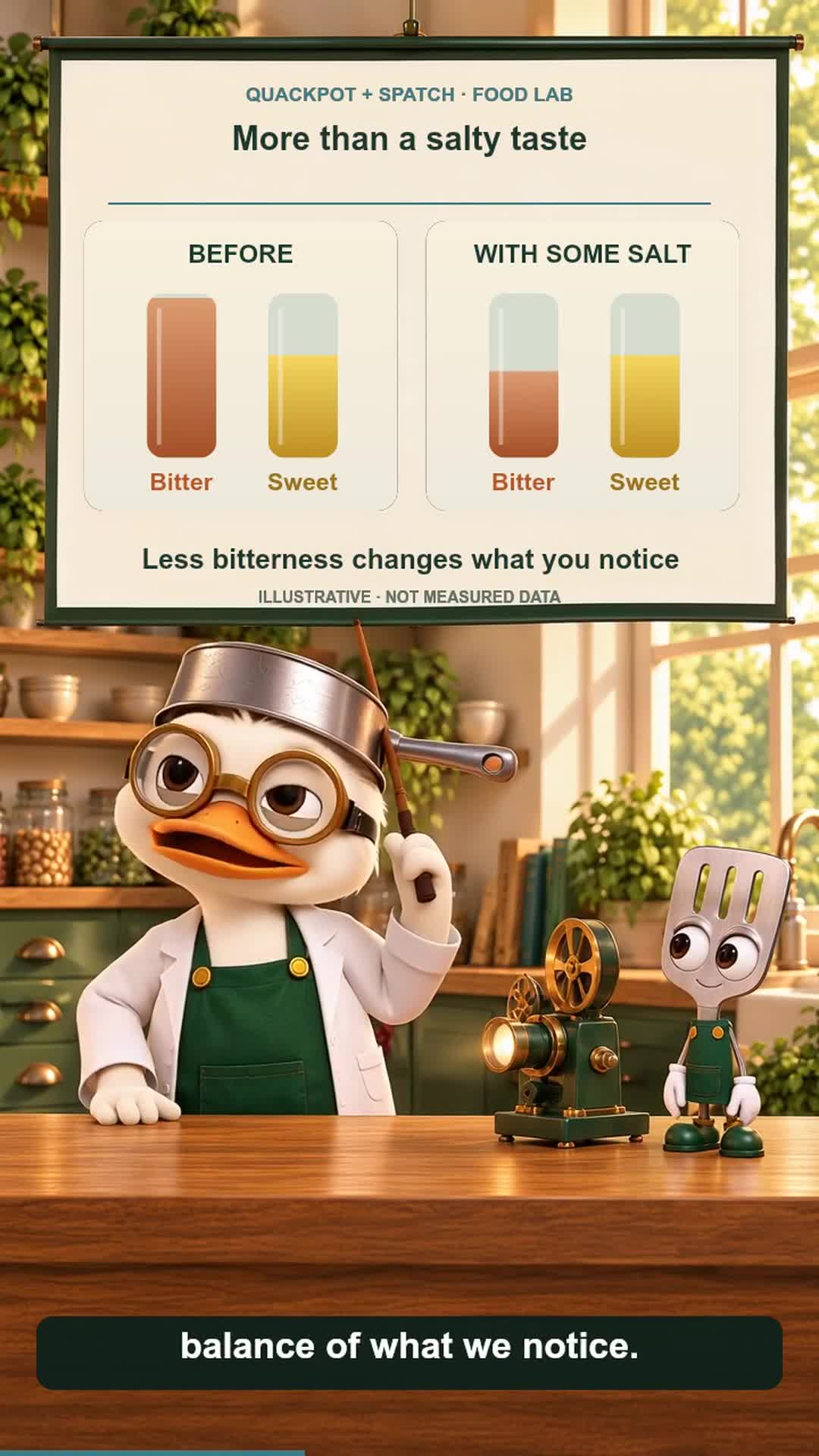
Salt adds salty taste. It can also reduce some bitter tastes, changing the balance of what we notice. In some mixtures, sweetness becomes easier to notice when bitterness is reduced. That does not mean salt creates sugar. My notebook would definitely object.

More is not always better

Does that mean more salt always makes food better? No. Too much can make saltiness dominate. The effect depends on the food, the amount, and the person tasting. Think of a sound mixer: balance the instruments instead of turning every knob to maximum.

Gone—or still there?

Prediction time! The salt crystals dissolve in a bowl of soup. Has the salt left the bowl, or is it still present even though you cannot see the crystals?

Still present in the liquid

Still present! Dissolving spreads the ions through the liquid; it does not remove them. And adding salt cannot rescue spoiled food. For kitchen tasting, follow the recipe with an adult and use clean spoons. We are investigating flavor, not holding a salt-eating contest.

CASE NOTES

Case notes: salt dissolves, adds saltiness, and can change how other tastes come through. A useful pinch is a question of balance, not bravery. Tiny crystals. Big chemistry. The microscopic chefs have been cleared of all charges. They were never on the payroll.

Sources & grown-up notes

Any tasting should follow a recipe with an adult and clean spoons. More salt is not always better.

A QUICK HELPING OF CURIOSITY

Small bites. Big discoveries.

Six shorts, including
Spatch’s very loose lid.

0:36

Why does toast turn brown?

A golden breakfast, a suspicious duck, and the Maillard reaction.

Read the transcript

THE TOAST CASE

Lab Members! This bread went into the toaster pale and came out golden. Suspicious! I prepared an acceptance speech for my brilliant breakfast. Then Chef Blaze asked why it turned brown. Right. A speech is not an explanation.

A delicious chemical change

Bread contains sugars and protein building blocks called amino acids. Heat helps some of them react, making new brown colors and toasty aromas. That's the Maillard reaction. It sounds like a duck's surname. Sadly, I cannot take credit.

0:41

Crispy isn’t the same as brown

Crunch and color tell different stories. QuackPot follows both clues.

Read the transcript

Crunch and color: different clues

Does crispy automatically mean brown? No! Toasting also drives off water, helping the surface become crisp. Losing water and making new browning compounds are different changes. My notebook needs two clues: texture, and color. Apparently, crunchy is not a complete scientific report.

Maillard or caramelization?

And is every brown food caramelized? Also no. Caramelization is another kind of browning involving sugars. Maillard browning involves sugars reacting with amino components. Both can create flavor, but they are not the same process. Two cases. One very busy notebook.

1:07

Spatch! The lid!

A dressing mystery becomes a very messy demonstration. Check the lid before shaking.

Read the transcript

THE DRESSING BREAKUP

Lab Members! My oil and vinegar dressing has formed two layers. I arranged a team meeting. Neither ingredient attended. Is the oil being rude, or is something happening that a motivational speech cannot fix? Let's open the case.

Different molecules. Different behavior.

Vinegar is mostly water. Water molecules interact strongly with one another, and oil does not dissolve into that water. The liquids separate. Ordinary cooking oil is also less dense, so its layer sits above the vinegar. No personality conflict required.

Check the lid!

Let's shake things up! Spatch! The lid! Make sure the lid is secure before shaking.

Shaking makes tiny droplets

Shaking can break oil into little droplets spread through the watery liquid. That's an emulsion. The oil has not vanished or dissolved. Without enough help, droplets can join again and the layers return. A temporary truce! I should have kept the meeting shorter.

0:50

Mustard: the dressing helper

A little help can keep oil droplets apart longer. But did the oil disappear?

Read the transcript

Can mustard help?

Can mustard help a dressing stay mixed? Yes. Mustard contains substances that help stabilize an emulsion, making it harder for oil droplets to join together. Mixing still matters. So do the ingredients and amounts. Mustard is a useful helper, not a forever guarantee.

Did the oil disappear?

Here's our prediction: when a dressing looks evenly mixed, has the oil disappeared, or is it still there in tiny droplets? Picture the jar before you answer.

Still there: tiny oil droplets

Still there, in droplets! Looking uniform is not the same as becoming one substance. These drawings are a simplified model, not microscope footage. If you explore a dressing with an adult, use food ingredients and check their labels.

0:38

Where did the salt go?

The visible crystals disappear. The salt stays in the water.

Read the transcript

THE SALT DETECTIVE

Lab Members! Today's suspect is tiny, white, and hiding beside the soup. Salt! It can change how food tastes without becoming the star ingredient. My first theory was microscopic chefs. Chef Blaze has requested a theory with slightly fewer chefs.

Dissolved does not mean gone

Table salt is sodium chloride. When it dissolves in water, sodium and chloride ions separate from the crystal and spread through the liquid. The visible crystals can disappear while the salt is still there. An excellent hiding place. A terrible disappearing act.

0:38

Does salt make food sweeter?

Salt can change the balance of tastes. It does not create sugar.

Read the transcript

More than a salty taste

Salt adds salty taste. It can also reduce some bitter tastes, changing the balance of what we notice. In some mixtures, sweetness becomes easier to notice when bitterness is reduced. That does not mean salt creates sugar. My notebook would definitely object.

More is not always better

Does that mean more salt always makes food better? No. Too much can make saltiness dominate. The effect depends on the food, the amount, and the person tasting. Think of a sound mixer: balance the instruments instead of turning every knob to maximum.

A LITTLE TRANSPARENCY

Privacy & site information

This website does not include a sign-up form or use its own analytics or advertising trackers. Video and shop filters work in your browser without saving your choices. This is a resource site for parents, educators, and adult cooks; it does not offer child accounts.

Fonts are loaded from Google Fonts, which receives your connection information. Hosting and access are provided by ChatGPT Sites and are subject to that service's privacy practices.

Games open on the separate QuackPot game collection, hosted on ChatGPT Sites. Game progress is stored in your browser on that game address. The learning library also saves notebook entries, bookmarks, and activity progress in this browser on this website. It does not upload that notebook to a server. You can export it, import a previous notebook, or clear it using the notebook controls. Saves do not sync automatically across sites or devices. The launch video plays directly on this website. YouTube links, purchases and feedback open on YouTube or Payhip. Feedback is sent through Payhip’s contact form. Their own terms, privacy policies, and cookies apply when you visit them. No payment details are collected on this website.

The cookbook is a First Edition Preview. Please review the product information and supervision guidance on its shop page before purchasing.